
In her letter to the Sona BLW board, Rani Kapur said documents executed by her at a time of "mental and emotional vulnerability" were being misused.

The Congress party has accused Union Minister Nitin Gadkari of conflict of interest, alleging his sons' companies have benefited from the government's ethanol blending policy. The BJP has rejected the allegations.
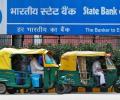
State Bank of India (SBI), the largest lender in the country, has launched a share sale to institutional investors to raise upto Rs 25,000 crore, the biggest qualified institutional placement (QIP) so far by an Indian firm, and has set a floor price of Rs 811.05, which is at a 2.5 per cent discount on Wednesday's closing price.

Tata Steel, Maruti, Tata Motors, Infosys, Bharti Airtel and Tech Mahindra were also among the laggards. However, Trent, Asian Paints, Hindustan Unilever, ITC, Kotak Mahindra Bank, and Reliance Industries were the gainers.

On the other hand, Bharat Electronics, Kotak Mahindra Bank and Axis Bank were the laggards. In Asian markets, South Korea's Kospi, Japan's Nikkei 225 index, Shanghai's SSE Composite index and Hong Kong's Hang Seng settled higher.

Top gainers in the Sensex pack include Yes Bank, TCS, Infosys, IndusInd Bank, HCL Tech, Bharti Airtel, HDFC, Sun Pharma, Bajaj Auto, ICICI Bank, Vedanta, Hero MotoCorp, ITC, Bajaj Finance, M&M and Tata Steel, surging up to 3.24 per cent.

In an event-heavy week, stock investors will track quarterly earnings of several bluechip firms, the likely outcome of ongoing India-US trade talks, and inflation data for market cues, analysts said on Sunday. Moreover, global market trends and trading activity of foreign investors would also guide movement in equities, they said.

The week's losses wiped out investor wealth worth Rs 18.43 trillion, with the total market capitalisation of BSE-listed firms now at Rs 441 trillion.
Defying the bearish sentiment in the markets on Monday, ICICI Bank's share price rose by 2 per cent, reaching an intraday high of Rs 1,234.4 per share on the BSE. With a 1.5 per cent gain at the close, the stock emerged as the top performer on both the BSE Sensex and the National Stock Exchange Nifty 50 indices.

Nearly 350 people were evacuated from Mumbai's Kurla area after the Mithi river swelled due to heavy rains. Authorities are monitoring the situation and working to ease the flow of water.
From the 30-share Sensex pack, Tata Consultancy Services, Titan, Infosys, Bharti Airtel, Bajaj Finance, ICICI Bank, HCL Technologies, and Tech Mahindra were the biggest gainers. NTPC and Asian Paints were the laggards.

Among 30 Sensex firms, UltraTech Cement, Tech Mahindra, HCL Tech, Tata Consultancy Services, Eternal, Asian Paints, Tata Steel and Kotak Mahindra Bank were among the biggest gainers. Tata Motors, Adani Ports and Sun Pharma were the laggards.
Benchmark Sensex rebounded by 167 points in a volatile trade on Friday amid buying in ICICI Bank, State Bank of India and Reliance Industries. The 30-share BSE Sensex climbed 167.06 points or 0.23 per cent to settle at 71,595.49. During the day, it hit a high of 71,676.49 and a low of 71,200.31.
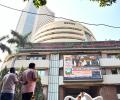
'BSE has facilitated nearly Rs 35 trillion in capital raising across multiple segments.'

From the 30 Sensex pack, ICICI Bank climbed 3 per cent after the private sector lender posted a 14.5 per cent growth in standalone profit to Rs 11,746 crore for the second quarter ended September 2024. JSW Steel, Mahindra & Mahindra, Adani Ports, Tata Steel, Sun Pharma, Hindustan Unilever, Tata Motors and State Bank of India were the other big gainers from the pack.

Sun Pharma, NTPC, Maruti, Bharti Airtel, Trent and Axis Bank were also among the gainers. However, Tata Motors, Power Grid, Eternal, Bajaj Finserv and Hindustan Unilever were among the laggards.
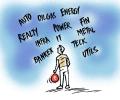
From the Sensex pack, Tata Motors, NTPC, Bajaj Finserv, Power Grid Corp, Titan, Asian Paints, IndusInd Bank, Maruti Suzuki India and Tata Steel were among the biggest gainers. Sun Pharmaceuticals, ITC, Hindustan Unilever, Bharti Airtel, UltraTech Cement and Reliance Industries were among the laggards.

IndusInd Bank, Nestle, UltraTech Cement, Mahindra & Mahindra, Power Grid, Asian Paints, Sun Pharma and Tech Mahindra were also among the laggards. Bajaj Finance, Bharti Airtel, ICICI Bank, Adani Ports and HCL Tech were among the gainers.

The crisis may not be as visible this time, but the stakes are just as high, points out Rajeswari Sengupta.

Equity benchmark indices Sensex and Nifty settled lower for the sixth straight session on Monday due to heavy selling in bellwether stocks including HDFC Bank and Reliance Industries amid mixed trends in the global markets and outflow of foreign funds. Falling for the sixth consecutive session, the BSE Sensex tumbled 638.45 points or 0.78 per cent to settle at 81,050. During the day, it plummeted 962.39 points or 1.17 per cent to 80,726.06. The NSE Nifty slumped 218.85 points or 0.87 per cent to end at 24,795.75.

From the 30-share pack, Hindustan Unilever, Tata Motors, Axis Bank, Nestle India, Asian Paints, ITC, Reliance Industries, Mahindra & Mahindra, IndusInd Bank and State Bank of India were among the laggards. Larsen & Toubro, Tata Steel, JSW Steel, HDFC Bank, Adani Ports, Kotak Mahindra Bank, Bharti Airtel and PowerGrid were among the gainers.

Coal India fell the most by 2.58 per cent among Sensex scrips, dragging the index into the negative zone.

Continuing buying interest across the pack helped the Bank Nifty index improve its new high on Tuesday (May 30). The index of banking stocks ended Tuesday's session at 44,436, a gain of 124 points or 0.3 per cent. On Monday (May 29), Bank Nifty hit a new high after a gap of 166 days.
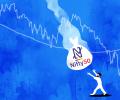
'We continue to view India as a standout within EM.'

From the Sensex firms, Eternal, Power Grid, ITC, Bajaj Finserv, Nestle, Axis Bank, Kotak Mahindra Bank and Adani Ports were among the biggest gainers. Sun Pharma was the only laggard, declining nearly 2 per cent.

The Securities and Exchange Board of India (Sebi) is set to introduce key reforms aimed at facilitating smoother mega initial public offerings (IPOs). Key among the proposals is a reduction in the quota reserved for individual investors - those applying for less than Rs 2,00,000 per application - from the current 35 per cent to 25 per cent for large IPOs (issue size above Rs 5,000 crore).

Analysts expect Nifty to rise up by to 6 per cent in six months, with intermittent corrections likely due to global factors.
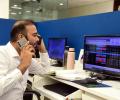
Among Sensex firms, Asian Paints, Bajaj Finance, Tata Steel, Bajaj Finserv, ICICI Bank, Maruti, Reliance Industries, HDFC Bank and Mahindra & Mahindra declined. Tech Mahindra, Tata Motors, Infosys, HCL Tech, IndusInd Bank and UltraTech Cement were among the gainers.
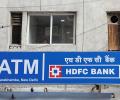
With a deployment of Rs 2,720 crore in July, MFs' total investment in HDFC Bank in calendar year 2024 (till now) surged to Rs 48,820 crore.

Many high-profile IPOs in India since 2021 have destroyed investor wealth due to overvaluation, weak business models, and post-listing disinterest, turning 1 lakh investments into as little as 3,500.

India is among the three least-favoured Asian stock markets, according to BofA Securities whose survey found that 10 per cent of fund managers are underweight on Indian equities from a 12-month perspective.

Foreign investors turned net sellers in October, offloading shares worth Rs 27,142 crore in just the first three days of October due to intensifying conflict between Israel and Iran, a sharp rise in crude oil prices, and improved performance of Chinese markets. The outflow came after FPI investment reached a nine-month high of Rs 57,724 crore in September. Since June, Foreign Portfolio Investors (FPIs) have consistently bought equities after withdrawing Rs 34,252 crore in April-May.

'For 40 years, India valued only technical skills. IITs, coding -- that became everything.' 'Soft skills were sidelined. But those are the skills that will keep you employable now, not technical skills.'

HCL Tech, State Bank of India, Infosys, Tech Mahindra, Tata Consultancy Services, Bajaj Finserv, Larsen & Toubro, Mahindra & Mahindra and Titan were also among the losers in the Sensex pack. Eternal, Hindustan Unilever, Asian Paints, ITC, Tata Motors and NTPC were among the gainers.

Despite recent underperformance, MNC funds have delivered over longer time frames.

When the market is down, you can buy more units, which offers you the rupee cost averaging. But the question here is, with so many options available in the market, which one should you choose? Keep reading to get the answer.

Analysts say domestic banks' dependence on local depositors insulates them from the crisis.
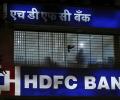
Analysts have largely maintained their positive outlook on HDFC Bank, as the private lender reported in-line results for the October-December quarter (Q3) of the current financial year (2024-25/FY25). They believe the results were 'strong' given the tough macro environment, and relative to peers.

The Jane Street-Sebi saga is more than a legal dispute -- it's a litmus test for India's ambitions as a global financial hub.

Benchmark stock indices Sensex and Nifty rebounded on Thursday after two days of decline, mirroring a rally in global markets as a US court blocked President Donald Trump's reciprocal tariffs. The 30-share BSE Sensex climbed 320.70 points or 0.39 per cent to settle at 81,633.02.
 © 2026 Rediff.com - Advertise with us - Disclaimer - Privacy Policy - Sitemap - Feedback - About us - Terms of use - Grievances